


News
Two Days of Science, Exchange and Team Spirit: This year´s second RIGeL-BioMediGS Summer School
24.09.2026
Two Days of Science, Exchange and Team Spirit: This year´s second RIGeL-BioMediGS Summer School
Latest News
24.09.2026
Two Days of Science, Exchange and Team Spirit: This year´s second RIGeL-BioMediGS Summer School
23.09.2026
RIGeL Lecture Series - Current Concepts in Biology, WS 2026/27
31.07.2026
An eventful first half of the year for our PR group
02.07.2026
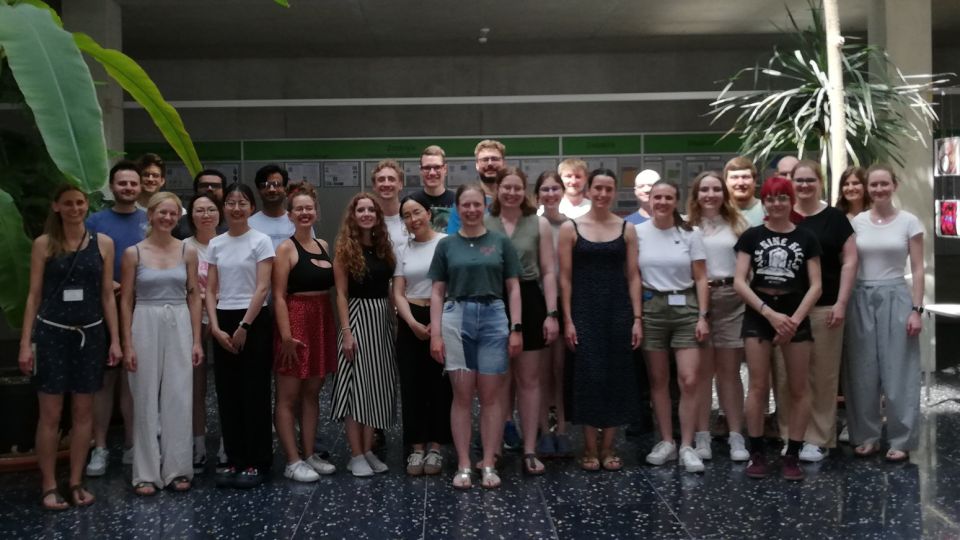
First Summer School 2026: Two inspiring days of science, collaboration, and fun
02.07.2026
A fascinating topic in our Graduate Colloquium Bioeconomy Lecture Series: Meat of the future – Opportunities and challenges of cultured meat
11.05.2026
Bioeconomy Lecture Series – Two insightful talks on plant mechanics and personalized cell engineering
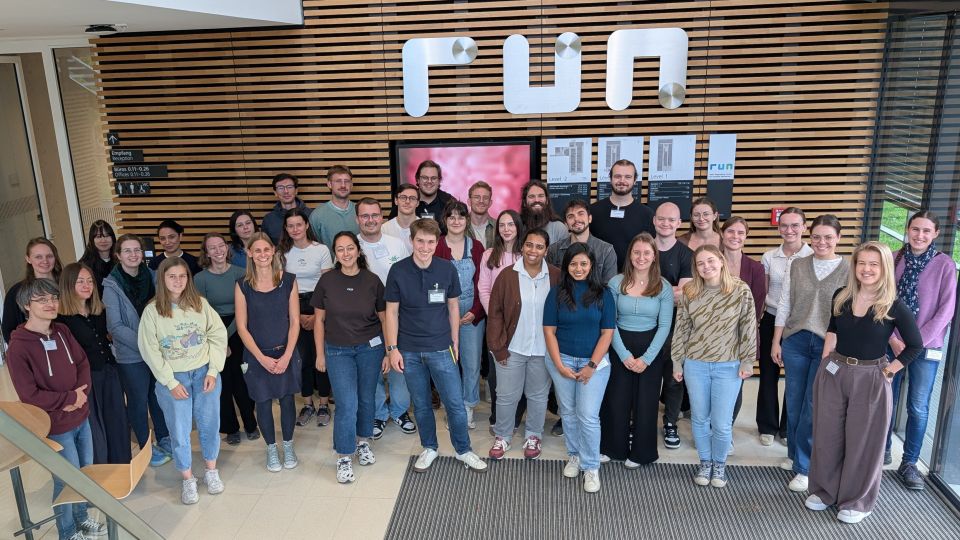
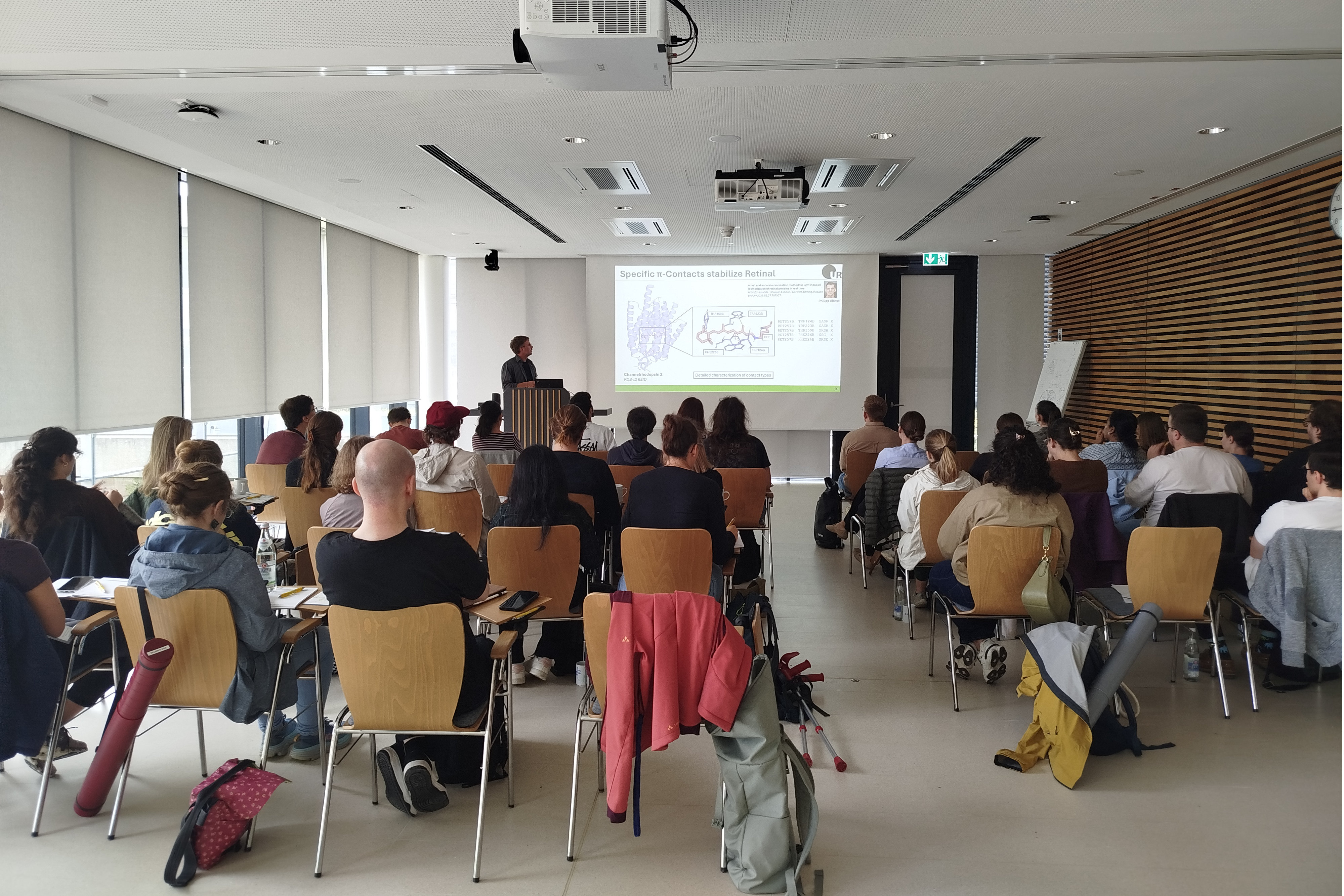
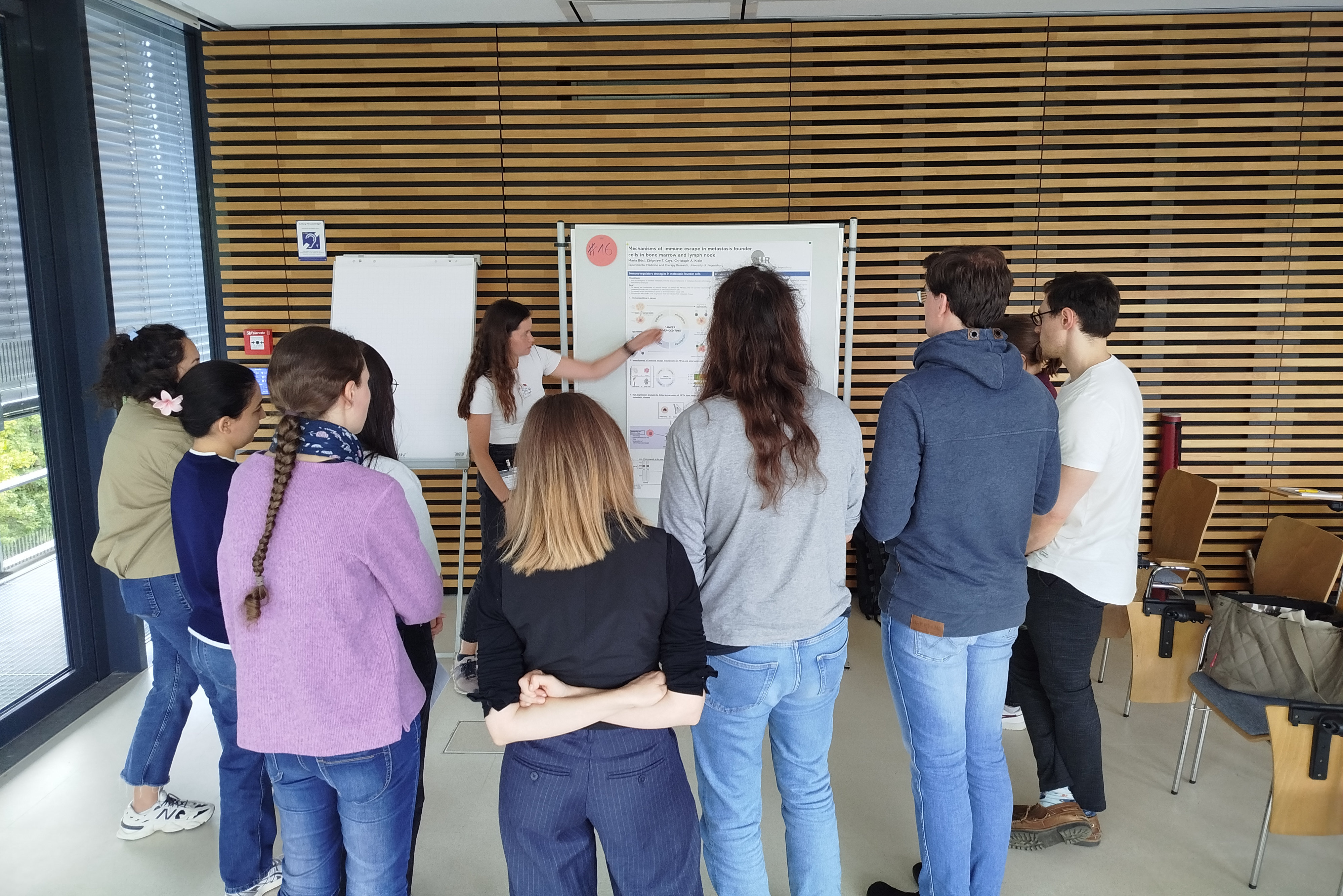
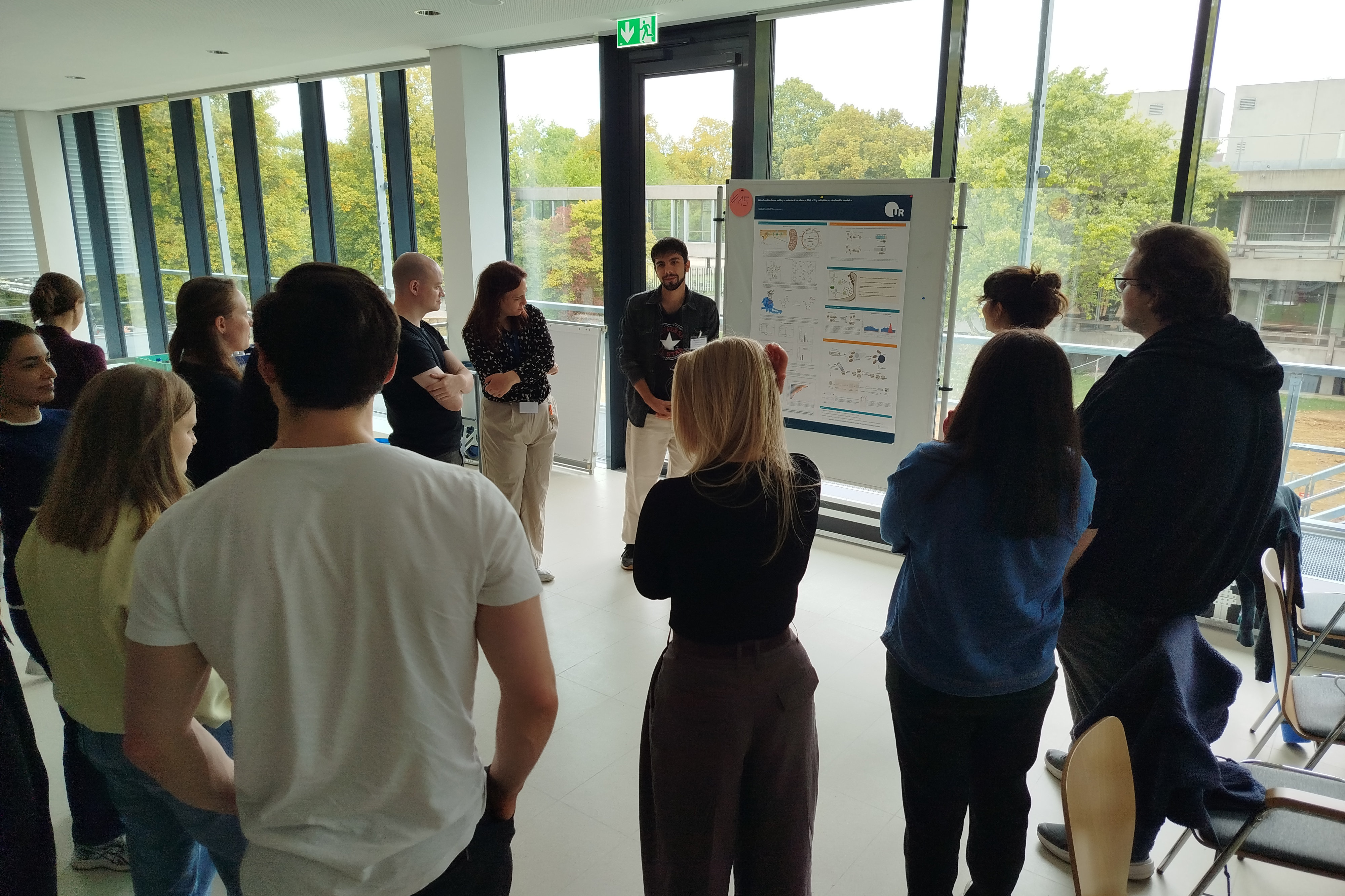
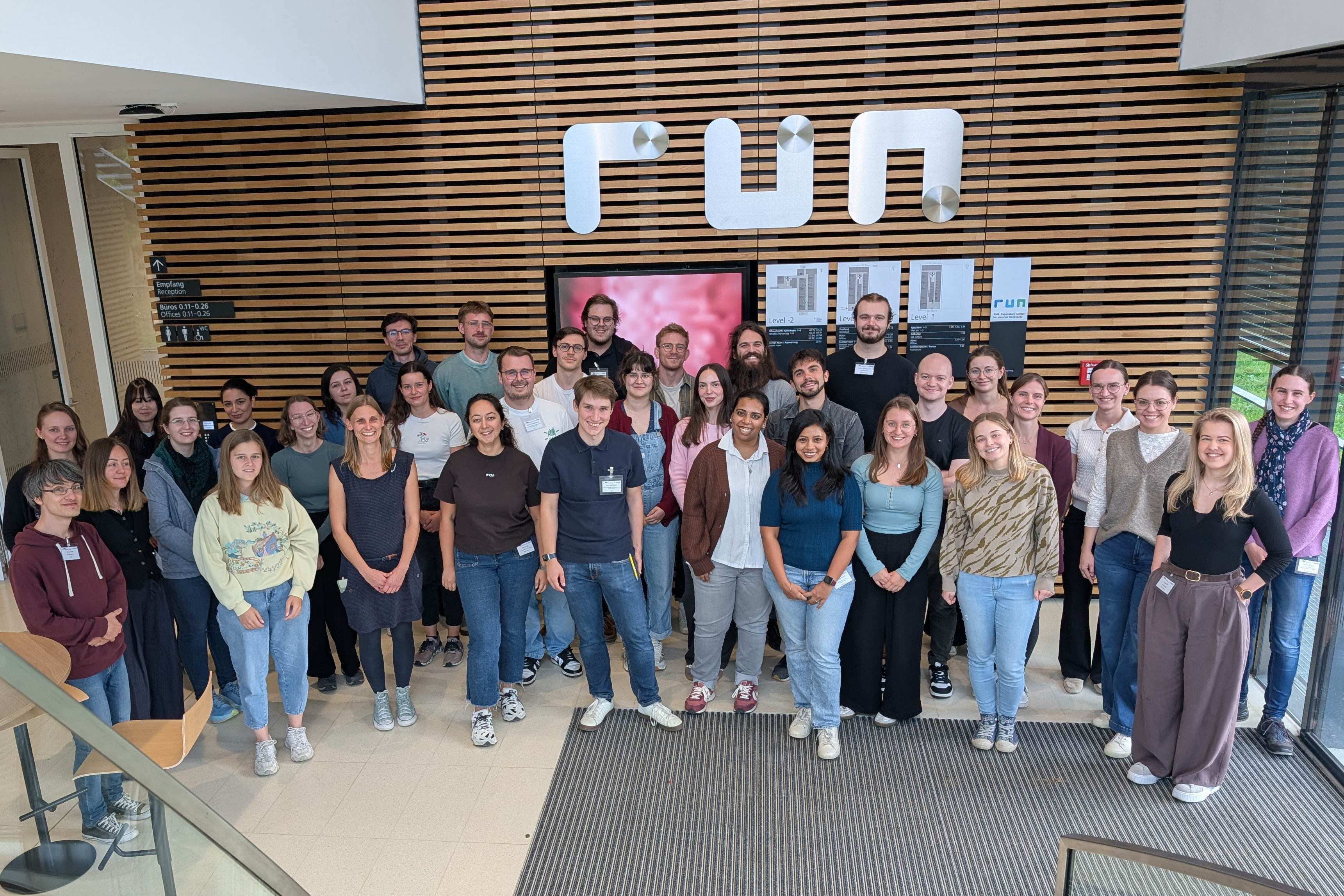
For two days, the Summer School of the Graduate Schools RIGeL and BioMediGS brought together scientific exchange, engaging discussions, and a great sense of community. A total of 37 doctoral researchers from different disciplines, including biochemistry, biophysics, biomedicine, bioinformatics etc., came together to present their research projects and latest results and to exchange ideas with their peers.
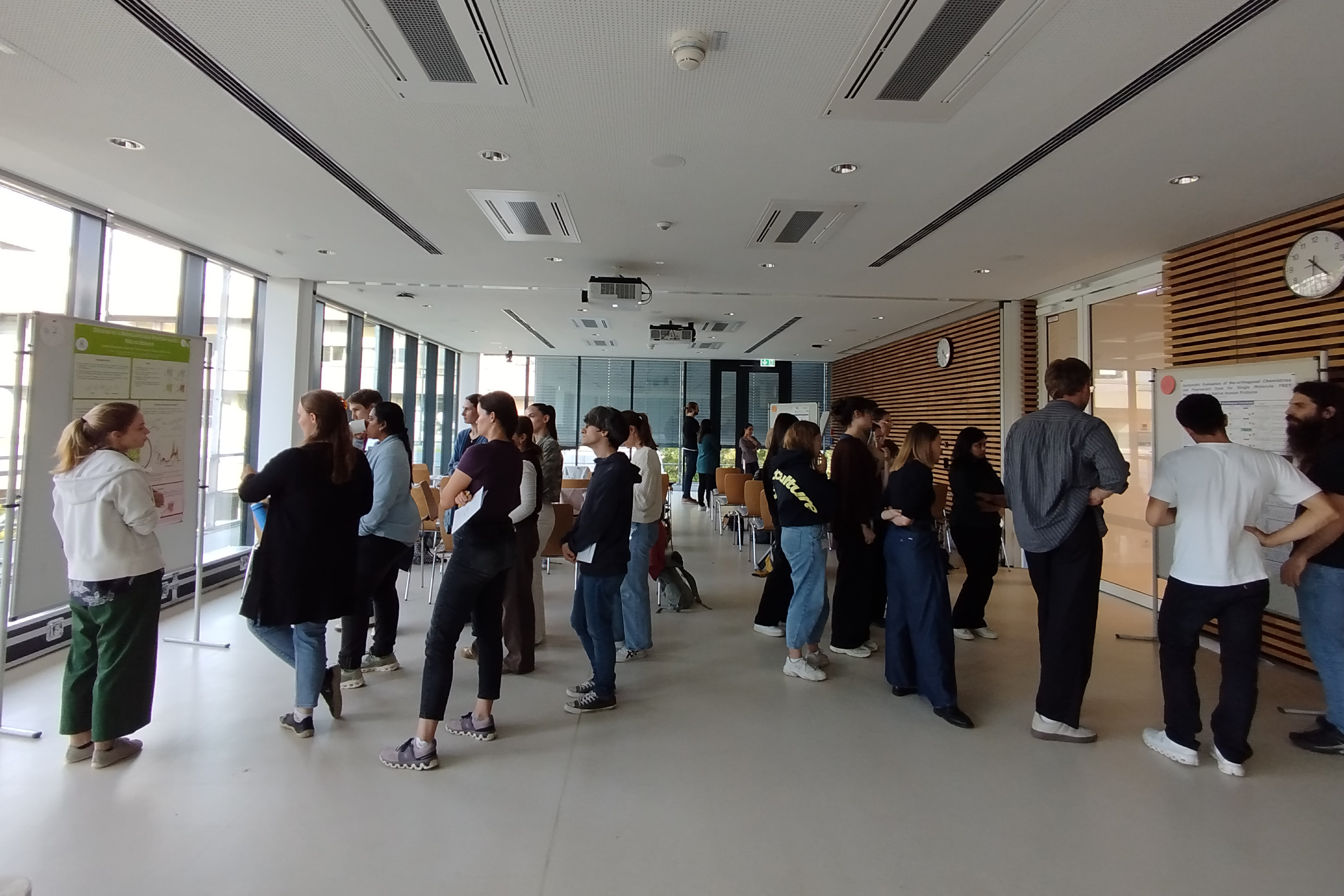
The programme featured a varied mix of talk and poster sessions, alternating throughout both days. This gave all participants the opportunity to present their own research while also gaining insights into the projects of their fellow PhD researchers. The diversity of scientific backgrounds made for interesting discussions and offered new perspectives beyond the boundaries of individual disciplines.
 |
 |
 |
 |
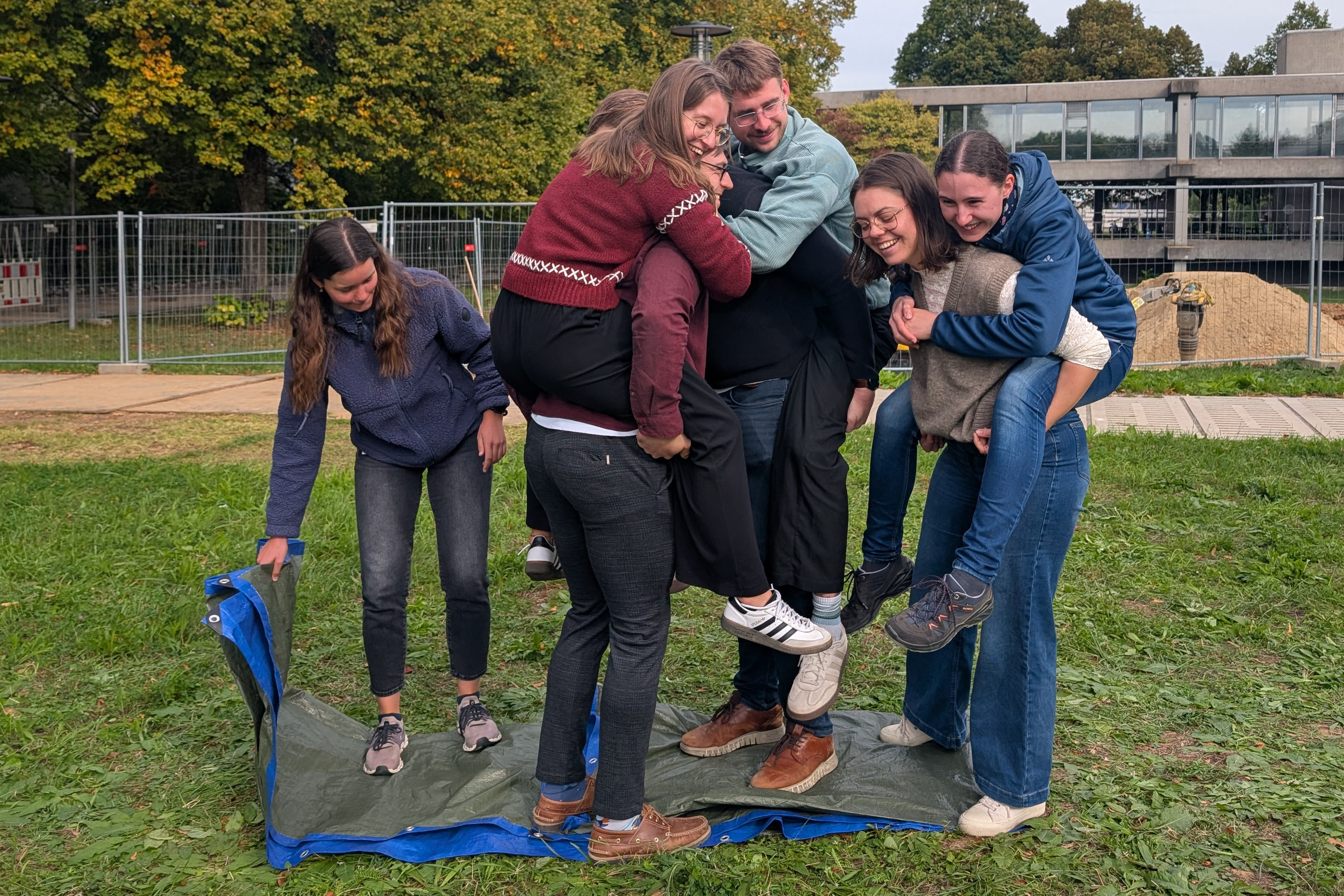
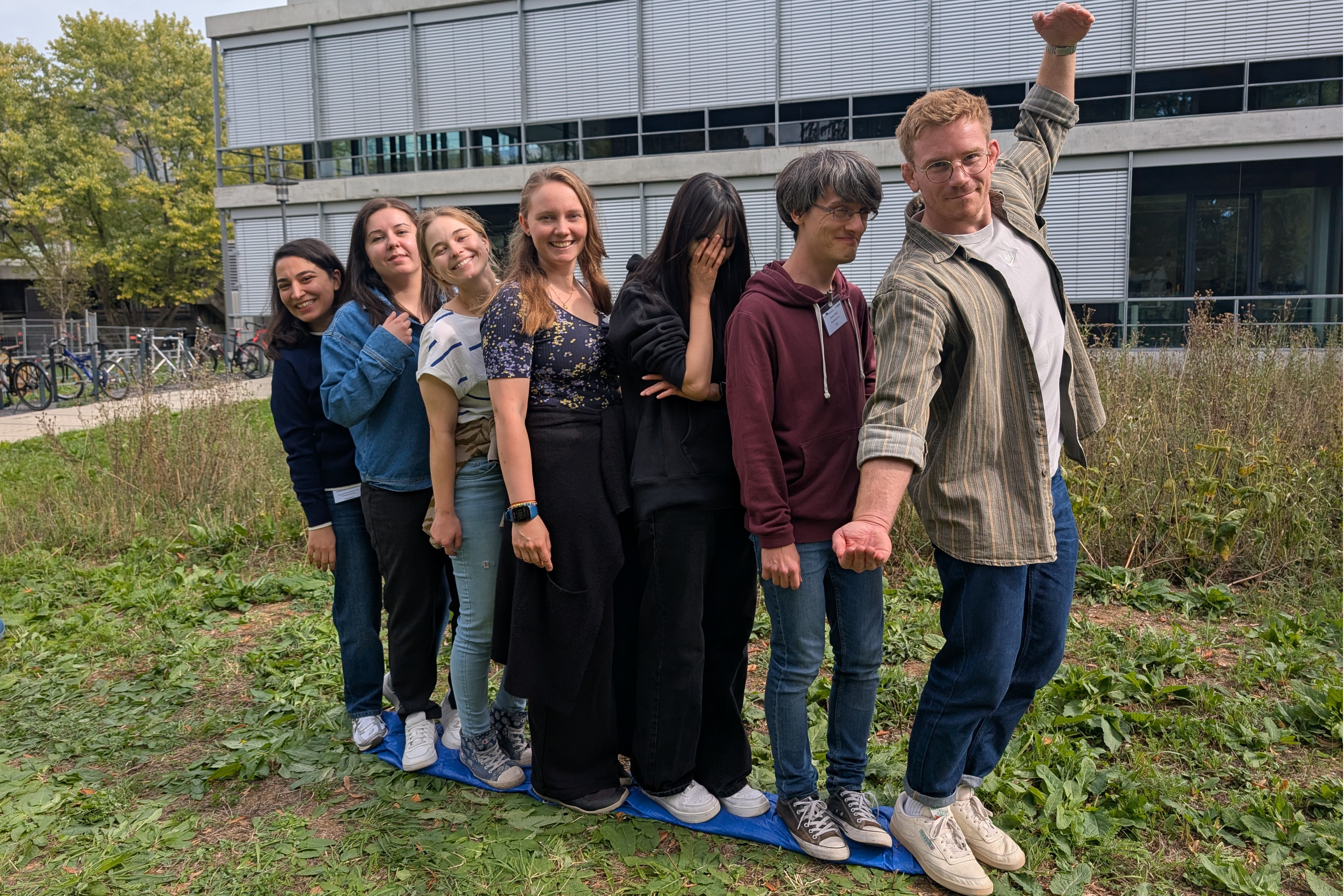
Between the scientific sessions, there was plenty of time for team activities. The various team games required creativity, coordination, and, above all, teamwork. In one challenge, for example, the teams had to turn over a large tarpaulin as quickly as possible while all team members were standing on it. Another challenge was to fold the tarpaulin as many times as possible while keeping the entire team on it. The participants also had a lot of fun during a lively game of Activity, which provided plenty of laughter and further strengthened the team spirit.
 |
 |
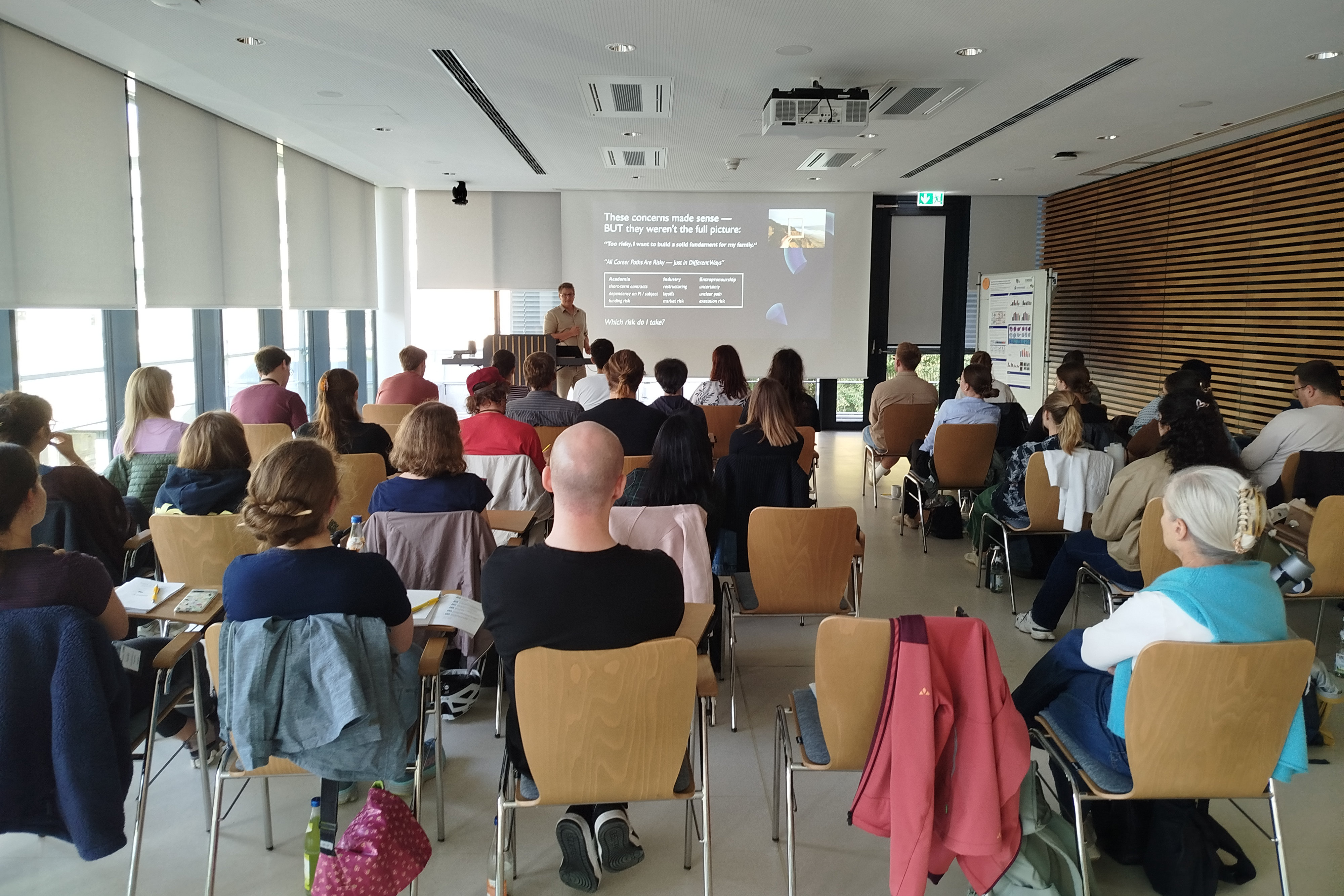
A particular highlight on the first afternoon was a talk by Dr. Tom Schubert entitled “You might be closer to entrepreneurship than you think”. Using practical and engaging examples, he encouraged the participants to look beyond the boundaries of academic research and consider entrepreneurship as a possible career path. He highlighted that, alongside the natural challenges and risks associated with starting a company, there are also many opportunities and advantages. The talk demonstrated how scientific ideas can serve as the starting point for innovative businesses.
 |
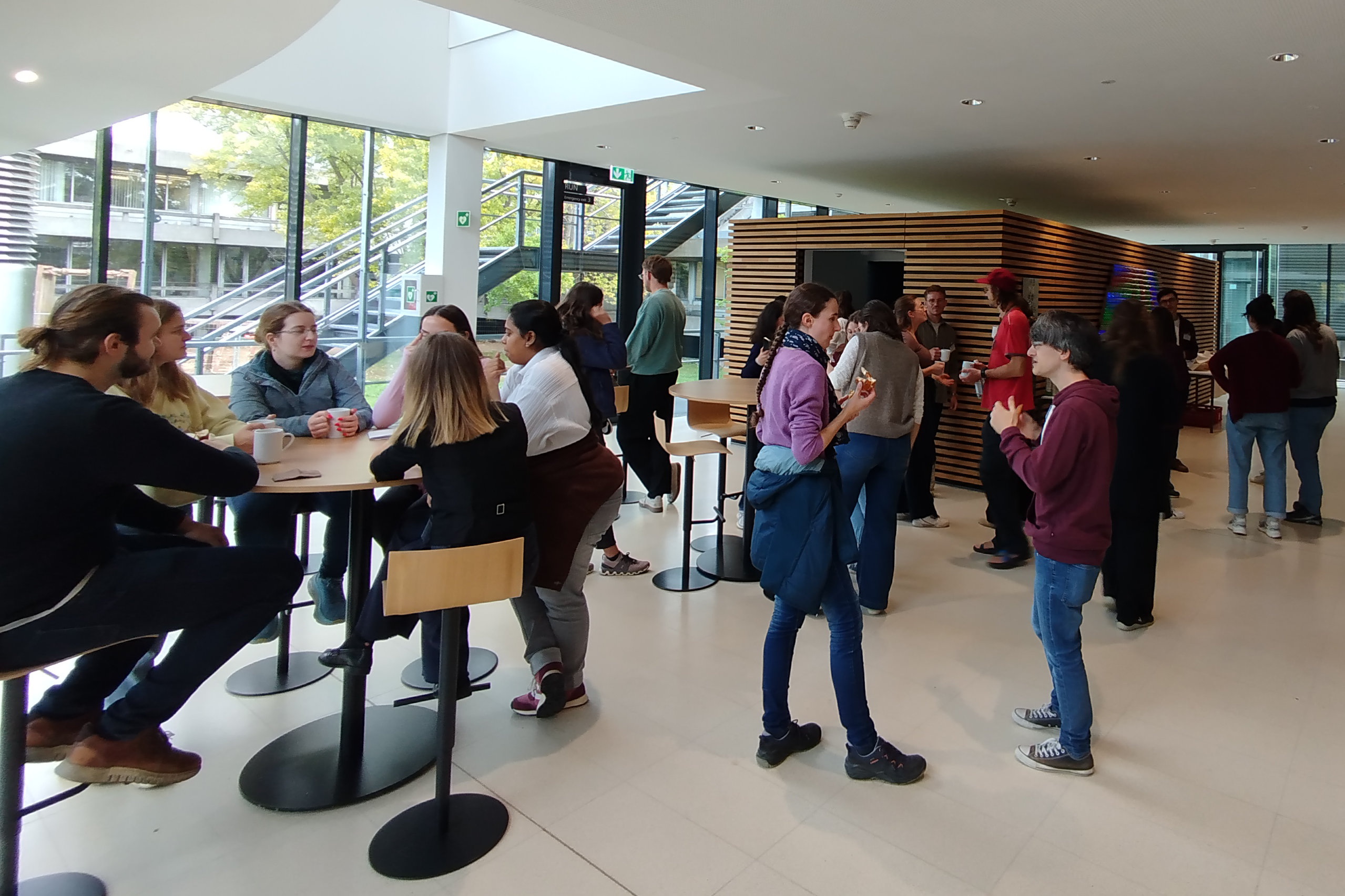
After the talk, everyone gathered for a relaxed get-together in front of the Chemistry Cafeteria. Over beer, Radler, other drinks, and snacks, the group brought the first day to a pleasant close in a relaxed atmosphere.
The Summer School had originally been planned to take place outside of Regensburg. Unfortunately, this was not possible this year, so the event was held on the campus instead. However, the RUN building provided a welcoming setting for the group. The modern and bright auditorium offered excellent conditions for the talks and presentations, while the spacious break area provided plenty of room for informal conversations and exchange.
 |
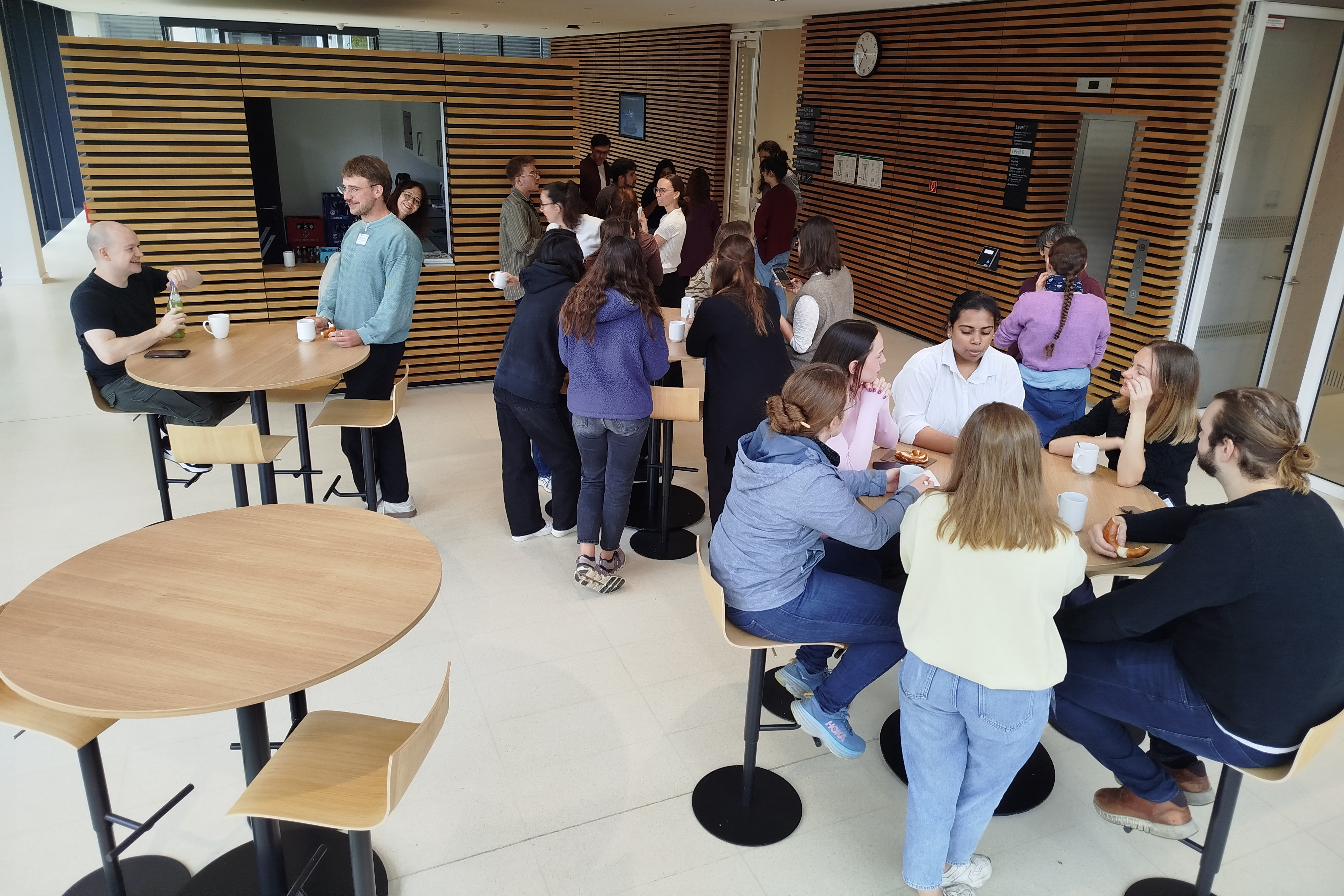 |
The participants were also well taken care of refreshments. Coffee breaks included butter pretzels and cake, while lunch was enjoyed together in the mensa, where tables had been reserved for the entire group. These shared breaks and meals provided additional opportunities to discuss research projects, exchange ideas, and get to know each other better.
The second day continued with the successful combination of poster and talk sessions and team activities. Thanks to the varied programme, the day passed by very quickly. Alongside presenting their research, participants had plenty of opportunities to exchange ideas and simply enjoy spending time together.
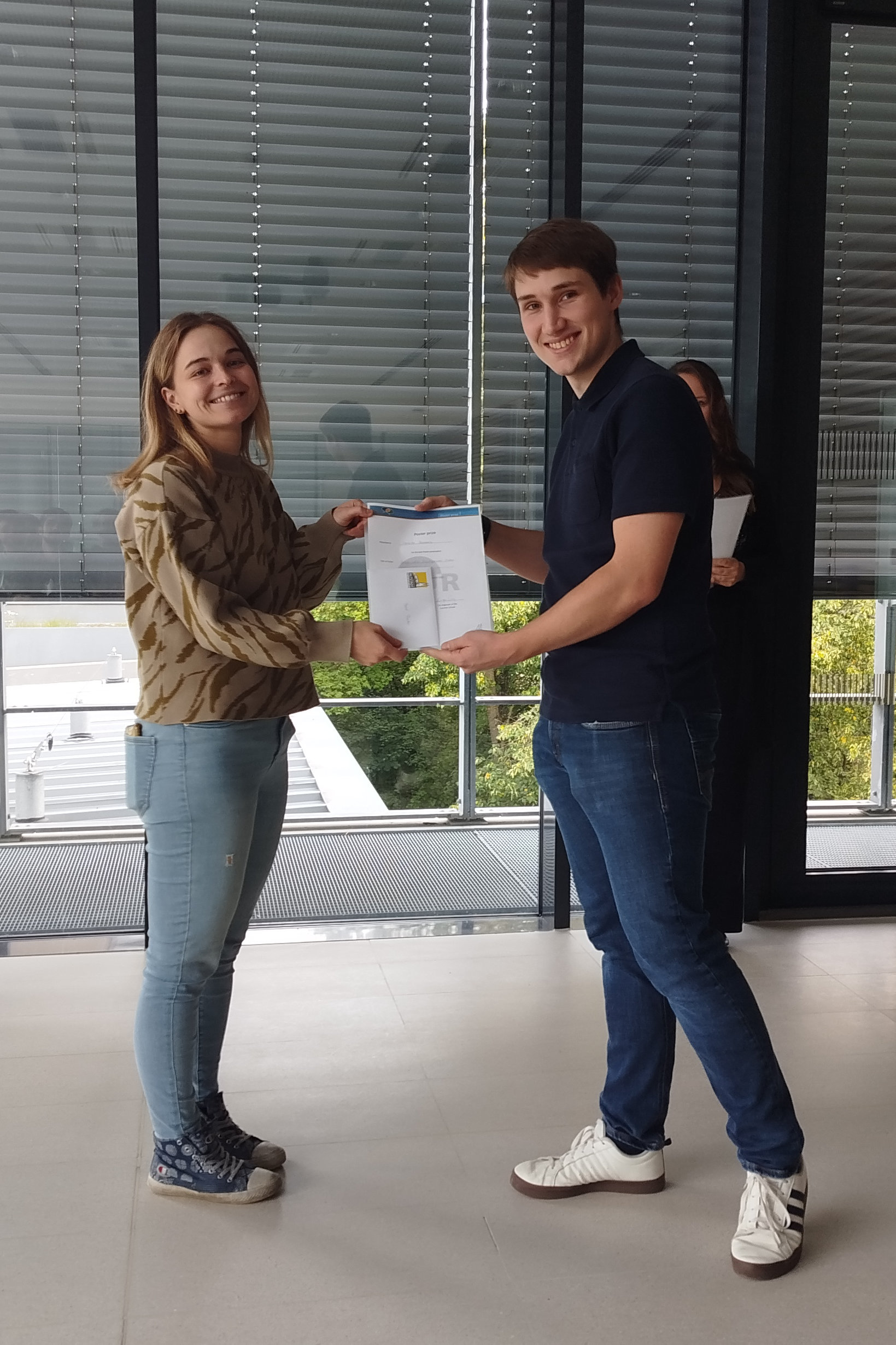
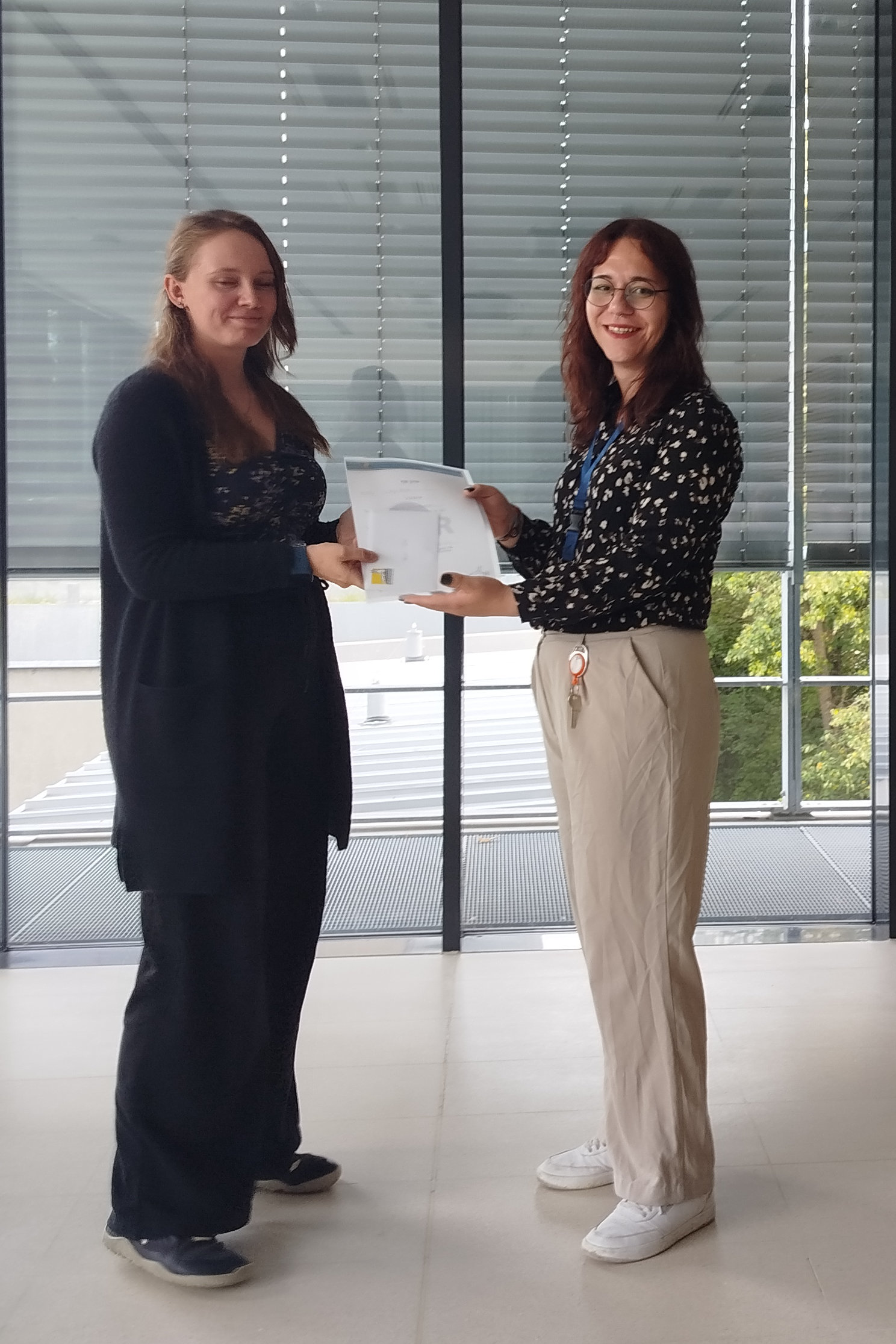
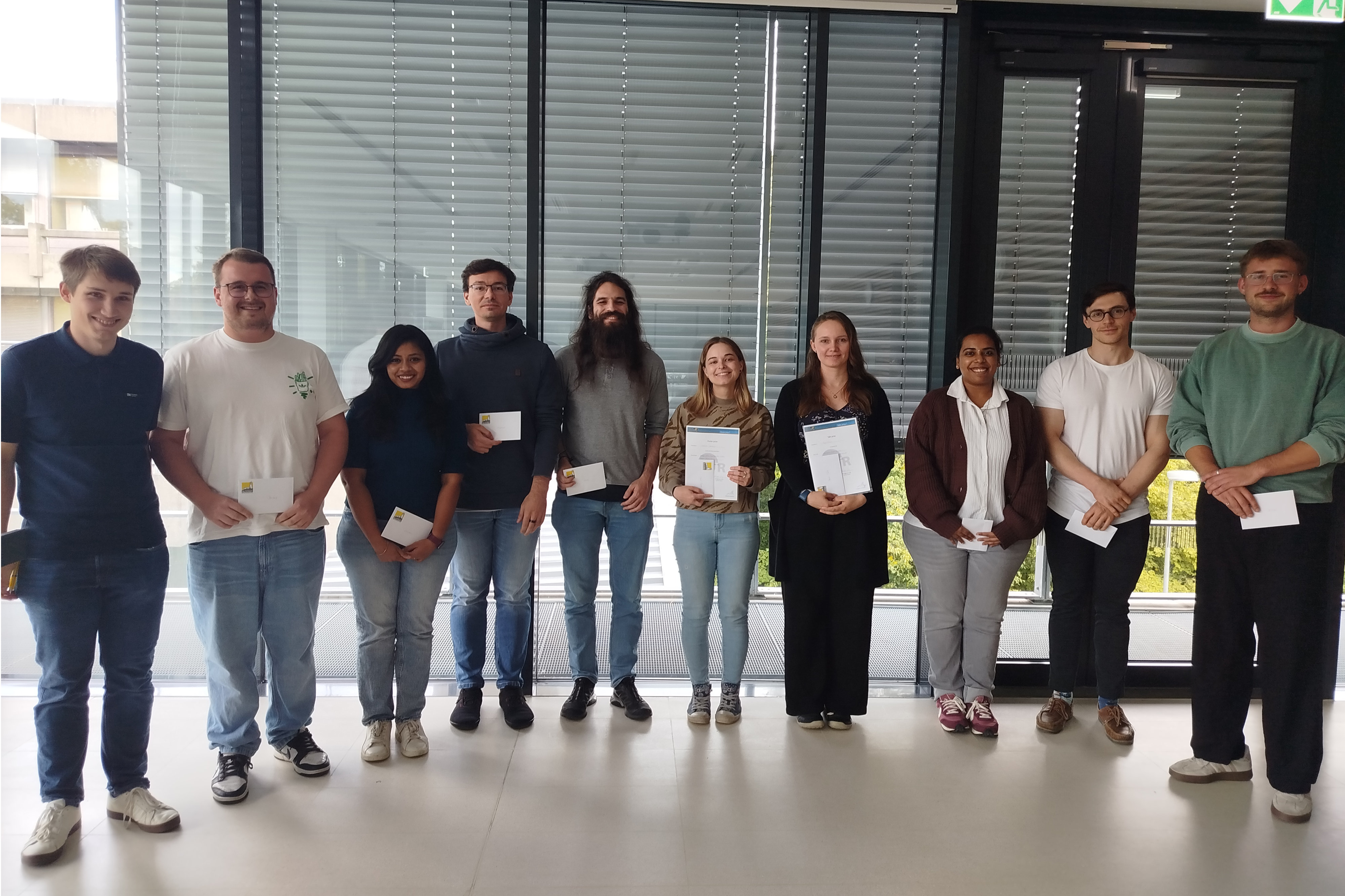
In the afternoon, the best scientific contributions were awarded. This year’s Best Poster Award went to Isabella Rembeck (Super-resolution microscopy) for her poster "Design of a Highlightable Protein-based Redox Sensor", while the Best Talk Award was presented to Kaja Grewe (Microbiology & Archaea Centre) for her talk "Aliens on Earth: Archaea, Membranes and the Limits of Life". The Best Questioners were also honoured. These awards went to the participants who asked the most scientific questions during the talk sessions and thereby contributed actively to the discussions. Usually, five Best Questioner prizes are awarded. However, due to a four-way tie for fifth place, a total of eight participants received the award this year. The winners were Luis Gaiser, Akila Swaminathan, Lakshmi Suresh, Christoph Müller, Robert Häusler, John MacNiven, Josef Schimpfhauser and Elias Wippermann.
 |
 |
 |
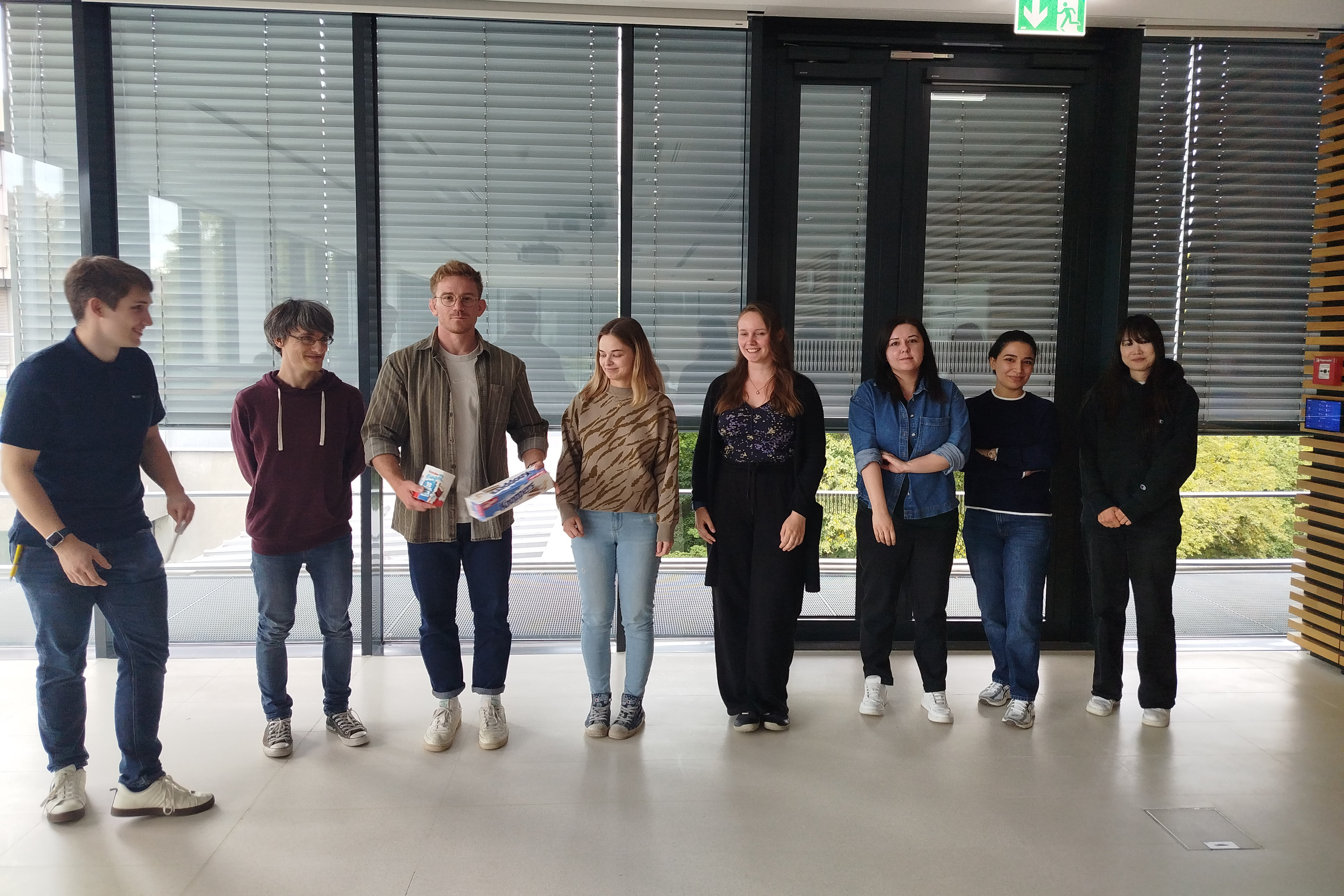
The best-performing team in the team challenges also received a well-deserved reward for their efforts and teamwork – in the form of sweets.
 |
The Summer School once again demonstrated the value of bringing together doctoral researchers from different disciplines within the life sciences. The combination of scientific presentations, stimulating discussions, practical insights, team challenges, and social activities made for two varied and enjoyable days. Although the Summer School could not take place outside of Regensburg this year, the RUN building provided an excellent setting for the event. Above all, it was the enthusiasm of the participants, their exciting research projects, and the positive atmosphere within the group that made this year’s Summer School a memorable experience.
Many thanks to all participants and everyone who contributed to making the Summer School a success!
 |